Negotiating From the Inspection Report, Number by Number
Published 2026-10-29
Stop Negotiating Feelings, Start Negotiating Dollars
Most inspection negotiations fall apart because both sides argue over feelings. The buyer feels nervous, the seller feels insulted, and the agents try to split the difference on a number nobody actually calculated. That's a bad way to move real money.
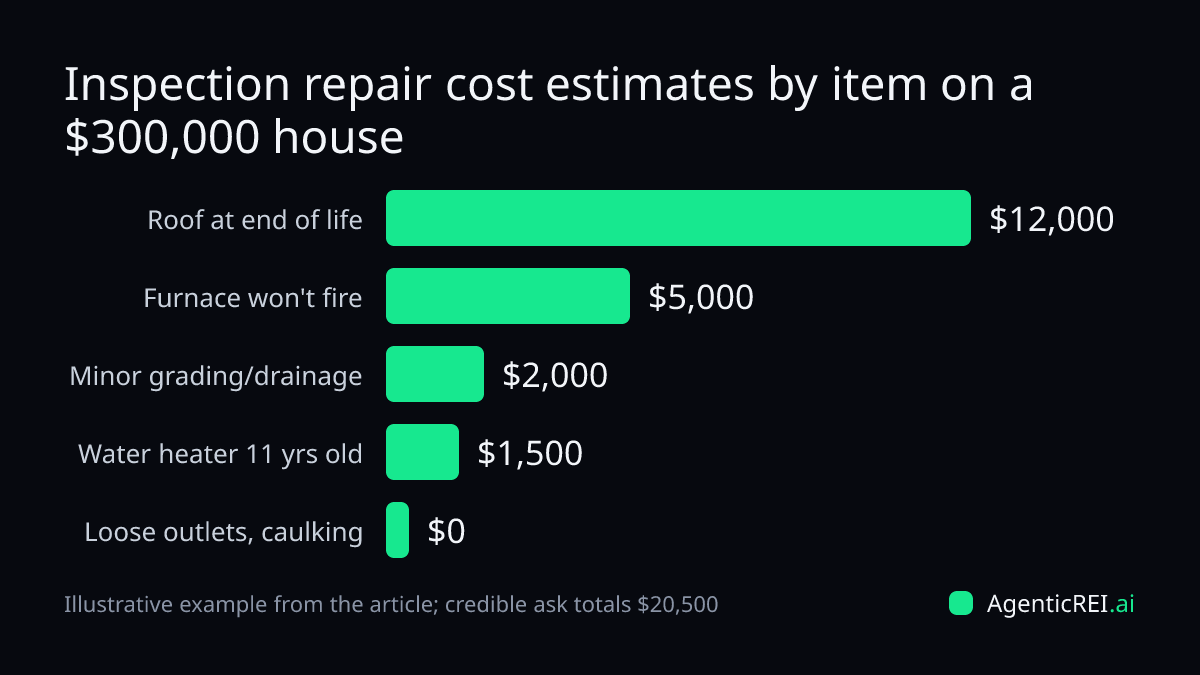
The better approach is boring: turn every defect on the report into a line item with a dollar figure attached, then negotiate the total. When you hand a seller a spreadsheet instead of a complaint, you change the conversation from "is this buyer being difficult?" to "is this number right?" The second conversation is one you can win.
Sort Every Finding Into Three Buckets
An inspection report will list 40 to 80 items. Most of them are noise. Before you ask for a single dollar, sort everything into three buckets.
Bucket one: safety and function. Things that make the house unsafe or unlivable — a failed furnace, exposed wiring, active leaks, a roof at the end of its life. These are your real leverage.
Bucket two: deferred maintenance with a clock. Items that work today but will cost you within a few years — aging water heater, worn HVAC, grading issues, old galvanized plumbing. These are legitimate but weaker asks.
Bucket three: cosmetic and informational. Cracked outlet covers, a sticky window, "recommend monitoring." Zero dollars. Asking for these makes the seller stop taking you seriously, which weakens buckets one and two.
If you run deals through the analyzer before writing offers, you already have a rough capex reserve in mind. The inspection just tells you which line items to pull forward.
Put a Number on Each Item
General rule: don't guess, quote. A seller can dismiss your opinion but not a contractor's estimate. For big-ticket items, get at least a verbal bid or use a reasonable regional cost that you can defend.
Here's an illustrative example on a $300,000 house:
| Item | Bucket | Cost estimate |
|---|---|---|
| Roof at end of life | Safety/function | $12,000 |
| Furnace won't fire | Safety/function | $5,000 |
| Water heater 11 yrs old | Deferred | $1,500 |
| Minor grading/drainage | Deferred | $2,000 |
| Loose outlets, caulking | Cosmetic | $0 |
| Total credible ask | $20,500 |
That $20,500 is your anchor. Notice you didn't pad it and you didn't include the cosmetic junk. Every line survives scrutiny.
Ask for a Credit, Not a Price Cut
Nine times out of ten, a closing credit beats a price reduction. A price cut lowers your loan amount slightly but you still show up to closing needing the same cash. A credit toward closing costs puts actual dollars back in your pocket at the table — money you can then spend fixing the exact items you just negotiated.
One catch: lenders cap seller credits (often around 3% to 6% depending on loan type and down payment). If your credible ask blows past that cap, split the difference — part price reduction, part credit. Run both versions through your calculators so you know which structure actually improves your cash position and your return, not just the headline price.
Anchor High, Concede on the Weak Stuff
Open with the full defensible total, then give yourself room to concede. You lead with buckets one and two. When the seller pushes back, you "give" on the deferred-maintenance items — the water heater, the grading — and hold firm on the safety items where the numbers are backed by bids.
That sequence matters. You look reasonable by conceding, but you concede the weak asks you were willing to lose anyway. You keep the roof and furnace, which were the real money all along.
Know When the Report Says Walk
Numbers also tell you when to leave. If the total credible repair figure wrecks your underwriting — foundation movement, a failed septic, systemic plumbing — and the seller won't move, the right answer is no deal. Your earnest money is cheap insurance compared to inheriting $60,000 of problems. Check what comparable condition and pricing look like in your market reports before you assume the seller has no better buyer; sometimes they do, and sometimes they're bluffing.
Keep the Paper Trail Clean
Submit your ask as an amendment with the itemized list and the contractor estimates attached. Sellers counter spreadsheets differently than they counter emotions. The documentation also protects you if the deal goes sideways later.
Concrete takeaway: Before your next inspection, build a three-column sheet — item, bucket, dollar estimate — and fill it in the same day you get the report. Negotiate only buckets one and two, lead with the full backed-up total, and ask for a closing credit up to your lender's cap. Numbers on paper close gaps that opinions never will.